How to Talk to Your Kids About Miscarriage and Stillbirth
August 21, 2026
I will talk about disclosure at a dinner party. I will talk about it in a waiting room. Heck, I will even talk about it to a stranger in the grocery store. Most people treat "how do I tell my child how they came to be" like a live grenade. I treat it like my favourite party trick, because once you take the fear out of it, it's genuinely one of the most beautiful conversations a family can have.
Disclosure In My Home
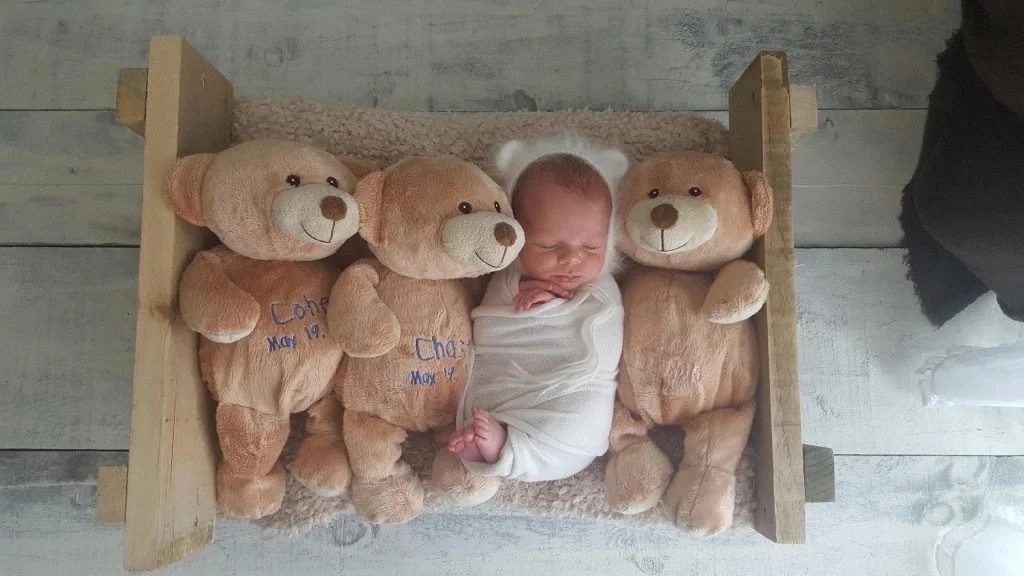
My two boys, Garrett, 8 and Wyatt, 10, have three siblings they never met. Chase, Cohen, and Cora. They know their names, who they are, and the purpose their lives had, without a big production around it. Their stories have never been a secret for us to manage, it just is what it is. For us, they are an integral part of Garrett and Wyatt’s story, their family and how it’s shaped.
Disclosure, in my home and in my work is not one dramatic sit down moment, it’s a thread that runs through ordinary life, brought up in small pieces at a pace that kids can actually hold whether that story captures donor conception, surrogacy, adoptions, or sibling who never made it earth side.
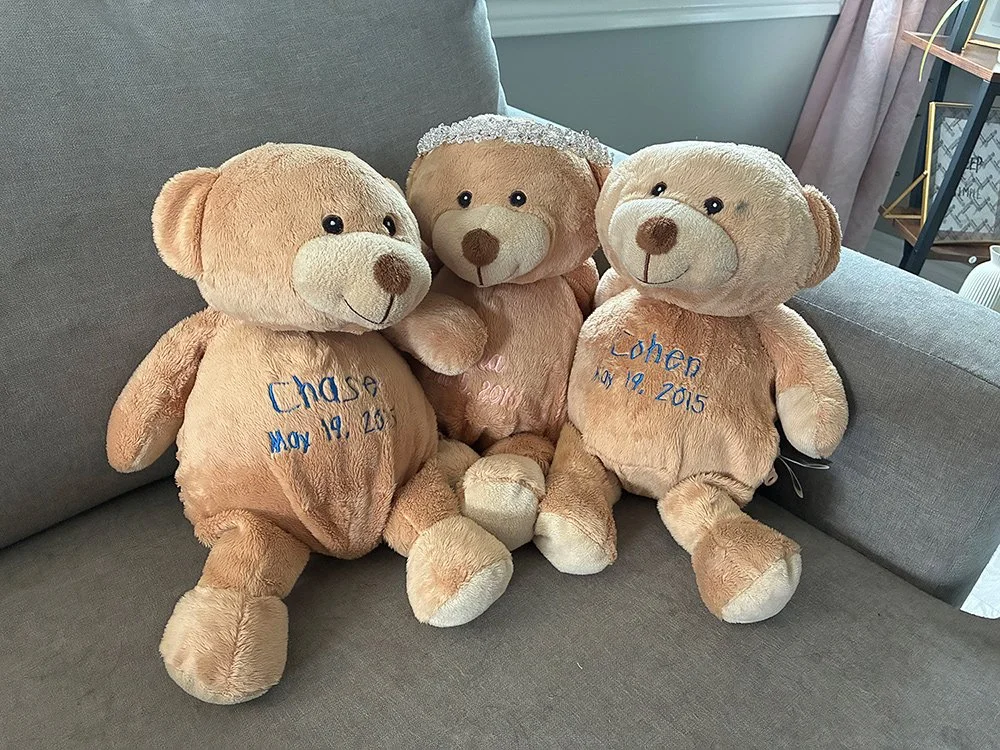
The bears that hold the urns of Ashley’s stillborn babies.
The Research
The natural instinct to wait until they’re older or ‘when the time feels right’ comes from a place rooted in love and protection. I get it, I struggled myself on how to share this story in a way that was shaped in knowing how deeply we wanted them, how we fought so hard for them, but also didn’t scare them or confuse them. Susan Golombok has a long running research study that focuses primarily on donor-conceived children. It highlights what I teach; children that learned about their stories in the early preschool years had more positive outcomes by middle childhood and better relationships with their parents by adolescent than children who found out later. Honestly, when we start these conversation early, most littles will respond with curiosity, sometimes indifference, and not the meltdown or shock we usually brace ourselves for.
Children that learned about their stories in the early preschool years had more positive outcomes by middle childhood and better relationships with their parents by adolescent than children who found out later.
To be fair, the research isn't a rigid formula. A widely cited 2017 review pushed back on the idea of one magic disclosure age, the data is genuinely mixed. What that tells me isn't "don't bother," it tells me disclosure isn't a single scheduled talk you nail once and check off. It's an ongoing conversation that grows up alongside your kid. What both bodies of research agree on: secrecy isn't neutral. Finding out later, especially by accident, carries real risk that early honesty doesn't.
Not shielding children from the facts of how they came to exist, whether that's a donor, a surrogate, or three siblings who didn't get to stay. The job is making sure that when they eventually put the full picture together, and they will, the picture includes you as the person who told them the truth all along. You're not protecting a kid by managing a wound out of sight. You're building one who trusts that you'll tell them the truth about their own life, every time.
So yes. Ask me about disclosure. I will not shut up about it.

Keep reading